
Retatrutide vs Tirzepatide vs Semaglutide: GLP-1 Mana yang Tepat untuk Anda?
Ditulis berdasarkan studi yang dikutip. Terakhir diperbarui 25 Jun 2026
Poin penting
Retatrutide vs Tirzepatide pada dasarnya bermuara pada reseptor dan angka uji klinis. Tirzepatide adalah senyawa dua reseptor (GLP-1 + GIP), disetujui FDA, dengan laporan penurunan berat badan sekitar 21-23% dalam uji klinis. Retatrutide menambahkan reseptor ketiga (glukagon) dan mencapai sekitar 28-30% pada data awal Fase 3, menjadikannya opsi dengan potensi lebih tinggi namun paling baru, dengan data keamanan jangka panjang yang paling sedikit.
Penurunan lemak pada intinya bermuara pada satu hal: energi yang masuk berbanding energi yang keluar. Jika Anda memasukkan lebih banyak energi (kalori) daripada yang dibakar, kelebihannya akan disimpan sebagai lemak. Jika Anda membakar lebih banyak daripada yang dimasukkan, tubuh Anda akan mengambil dari cadangan tersebut. Ini adalah termodinamika dasar, dan tidak ada yang bisa menghindarinya, baik itu peptida maupun obat. GLP-1 bekerja pada sisi "energi yang masuk" dengan mengurangi nafsu makan. Ketiga senyawa di bawah ini adalah obat GLP-1, dan itulah kerangka untuk membedakan ketiganya.
Tiga senyawa mendominasi percakapan tentang penurunan berat badan saat ini, dan orang-orang sering menyebutkan nama-nama tersebut seolah-olah semuanya adalah obat yang sama. Padahal tidak. Semaglutide (dijual sebagai Ozempic dan Wegovy) adalah yang memulai semuanya. Tirzepatide (Mounjaro dan Zepbound) mendorong hasil uji klinis lebih jauh. Dan Retatrutide, yang masih menggunakan nama laboratoriumnya karena belum memiliki merek dagang, adalah pendatang baru yang mencatatkan angka uji klinis terbesar dari semuanya.
Perbedaan di antara ketiganya lebih sederhana dari kedengarannya. Masing-masing bekerja pada satu, dua, atau tiga reseptor metabolik. Sebagai aturan umum, lebih banyak reseptor sejalan dengan penurunan berat badan yang lebih besar dalam uji klinis serta lebih banyak hal yang perlu dipantau.
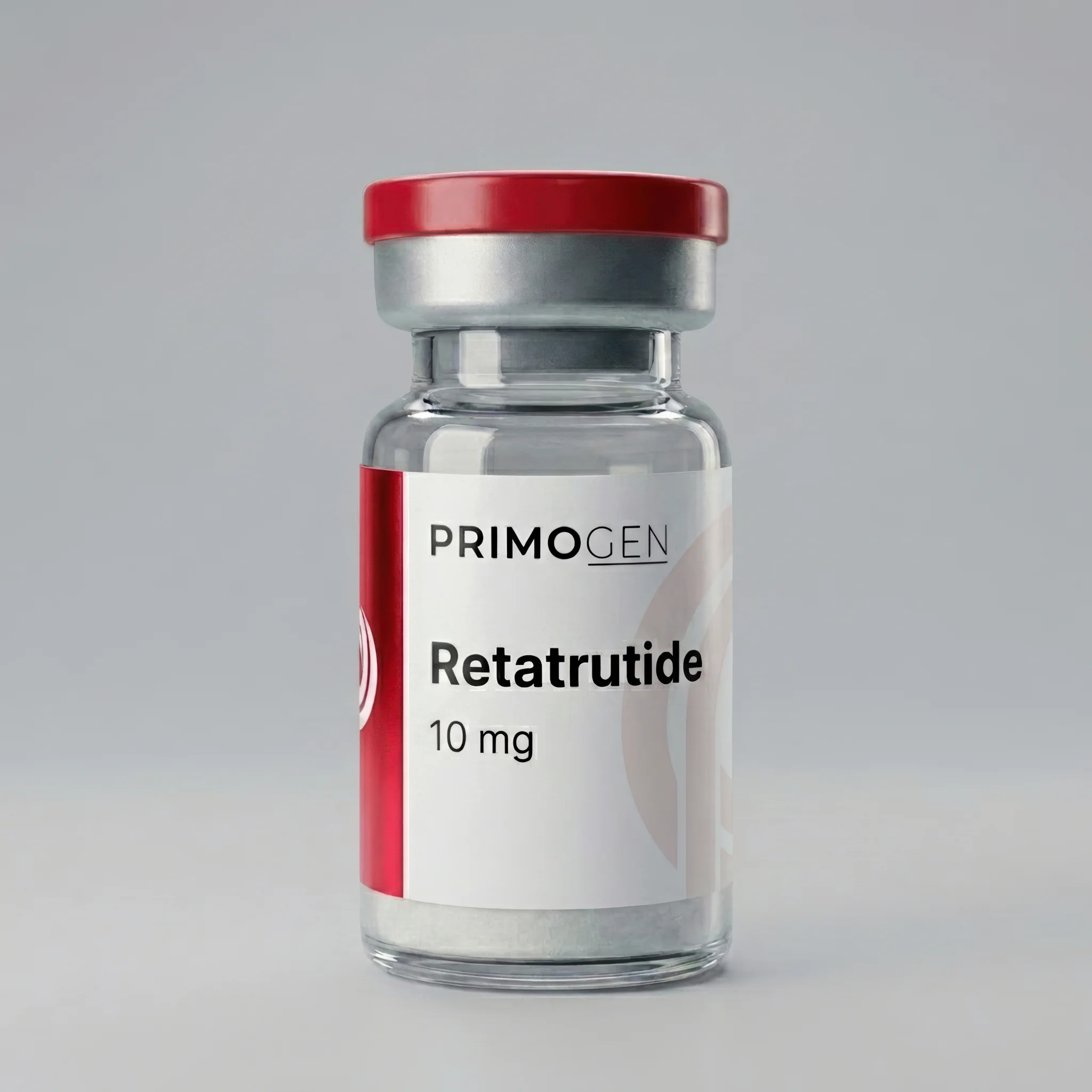
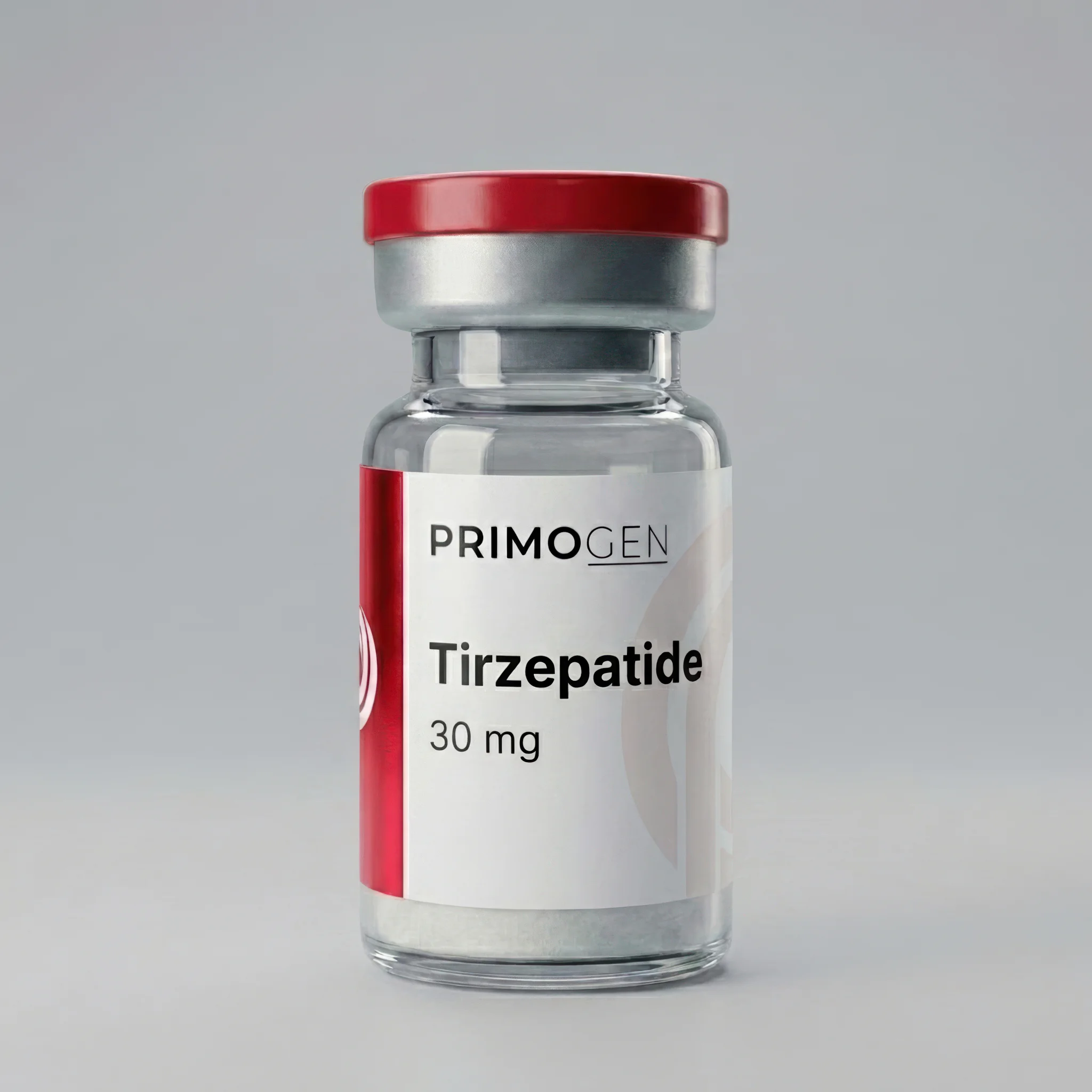
Sedikit catatan tentang posisi kami: Primogen menyediakan Retatrutide dan Tirzepatide, dan bukan Semaglutide. Alasannya ada di bawah ini. Ketiganya dijual sebagai senyawa penelitian, dan panduan ini bertujuan untuk memisahkan apa yang benar-benar terbukti dari apa yang masih dalam proses pembuktian.
Retatrutide vs Tirzepatide vs Semaglutide: bagaimana perbandingannya secara singkat?
Dalam satu kalimat: Semaglutide adalah versi orisinal reseptor tunggal (~15% dalam uji klinis), Tirzepatide adalah jalan tengah reseptor ganda (~16-22.5%), dan Retatrutide adalah pendatang baru tiga reseptor (~24% Fase 2, hingga ~30% data awal Fase 3). Perbandingan lengkapnya ada di bawah ini.
| Semaglutide | Tirzepatide | Retatrutide | |
|---|---|---|---|
| Nama merek | Ozempic, Wegovy | Mounjaro, Zepbound | Belum ada (Fase 3) |
| Reseptor | GLP-1 | GLP-1 + GIP | GLP-1 + GIP + glukagon |
| Kelas | Agonis tunggal | Agonis ganda | Agonis rangkap tiga |
| Status | Disetujui FDA | Disetujui FDA | Fase 3, menunggu persetujuan |
| Penurunan berat badan uji klinis | ~15% (STEP) | ~16-22.5% (SURMOUNT-1) | ~24% Fase 2, hingga ~30% data awal Fase 3 |
| Waktu paruh | 7-10 hari | ~5 hari | 6-14 hari |
| Frekuensi | Mingguan | Mingguan | Mingguan (atau dibagi) |
| Keunggulan | Data terbanyak, biaya terendah | Keseimbangan kekuatan dan bukti yang teruji | Potensi tertinggi, manfaat metabolik terluas |
| Perhatian | Tertinggal oleh yang lain | Efek samping pencernaan | Detak jantung lebih tinggi, data paling baru |
| Disediakan oleh Primogen | Tidak | Ya | Ya |
Bagaimana perbedaan cara kerja ketiga senyawa ini?
Perbedaannya terletak pada jumlah reseptor yang diaktifkan oleh masing-masing senyawa: Semaglutide menargetkan satu (GLP-1), Tirzepatide dua (GLP-1 + GIP), dan Retatrutide tiga (GLP-1 + GIP + glukagon). Ketiganya dirancang untuk meniru hormon usus yang dilepaskan tubuh setelah makan, dan jumlah reseptor adalah perbedaan mekanistik utama di antara ketiganya.
Semaglutide adalah agonis GLP-1 murni, sebuah molekul yang mengaktifkan reseptor. Reseptor ini merupakan titik sandar sel untuk GLP-1, salah satu hormon usus yang dilepaskan setelah makan. Dalam farmakologi yang dipublikasikan, senyawa ini bekerja pada neuron pemberi sinyal lapar di otak, memperlambat pengosongan lambung, dan meningkatkan kontrol glikemik (Coskun et al. 2022 menjelaskan farmakologi multi-reseptor dari kelas ini). Mekanisme tunggal itulah yang menjadi dasar dari Ozempic dan Wegovy.
Tirzepatide menambahkan GIP, hormon usus kedua yang bekerja bersama GLP-1. Dalam literatur penelitian, ko-agonisme GIP dikaitkan dengan peningkatan sensitivitas insulin dan, dalam uji klinis, penurunan berat badan yang lebih besar daripada Semaglutide dengan profil efek samping gastrointestinal yang sebanding. Perbedaan hasil uji klinis itulah yang membuat Tirzepatide, sebagai Mounjaro dan Zepbound, menjadi tolak ukur agonis ganda.
Retatrutide menambahkan reseptor ketiga, yaitu glukagon, sebuah hormon metabolik yang memobilisasi energi yang disimpan. Hal inilah yang mengubah karakter molekul tersebut. Dalam farmakologi hewan dan fase awal, agonisme glukagon dikaitkan dengan peningkatan pengeluaran energi saat istirahat, lipolisis langsung, dan pengurangan lemak hati (Coskun et al. 2022). Mekanisme tambahan itulah yang menjadi alasan mengapa Retatrutide mencatatkan angka total penurunan berat badan tertinggi dari ketiganya dalam uji klinis, dan hal ini mendasari temuan metabolik yang lebih luas di bawah nanti.
Singkatnya: Semaglutide dan Tirzepatide bekerja terutama pada jalur nafsu makan. Desain agonis rangkap tiga Retatrutide juga menargetkan pengeluaran energi saat istirahat.
Namun, ada satu hal yang perlu diperjelas: dari miligram ke miligram, sinyal penekan nafsu makan Retatrutide dalam uji klinis sedikit lebih lemah daripada Tirzepatide, dan efeknya bisa memudar sedikit lebih cepat. Keunggulannya dalam uji klinis tidak datang dari efek nafsu makan yang lebih kuat. Keunggulan tersebut berasal dari kemampuannya bekerja pada lemak melalui lebih banyak mekanisme sekaligus.
Apa yang ditunjukkan oleh data uji klinis tentang penurunan berat badan?
Dalam uji klinis registrasi, rata-rata penurunan berat badan meningkat dengan setiap penambahan reseptor: sekitar -15% untuk Semaglutide, hingga -22.5% untuk Tirzepatide, dan hingga -24.2% (Fase 2) menjadi ~30% (data awal Fase 3) untuk Retatrutide. Berikut adalah rincian uji klinis yang meloloskan masing-masing senyawa, atau untuk Retatrutide, uji klinis yang masih berjalan:
- Semaglutide (program STEP): rata-rata penurunan berat badan sekitar -15% pada dosis mingguan 2.4 mg.
- Tirzepatide (SURMOUNT-1): -16.0% / -21.4% / -22.5% pada 72 minggu untuk dosis 5 / 10 / 15 mg.
- Retatrutide (Fase 2, Jastreboff et al. 2023, NEJM): hingga -24.2% pada 48 minggu dengan dosis 12 mg, dan kurva penurunan belum mendatar pada akhir studi. Fase 3 data awal TRIUMPH-1 (dilaporkan Mei 2026): rata-rata penurunan berat badan hingga 30.3% pada dosis tertinggi, yang merupakan angka penurunan berat badan non-bedah terkuat yang dilaporkan hingga saat ini.
Ada dua hal yang perlu disampaikan secara jujur di sini. Angka Fase 3 Retatrutide tersebut adalah data awal langsung dari Lilly, belum berupa makalah lengkap yang ditinjau oleh sejawat, jadi anggaplah ini sebagai sesuatu yang sangat menjanjikan dan bukan hasil mutlak. Selain itu, angka uji klinis berasal dari pemberian dosis yang diawasi dengan titrasi yang tepat (menaikkan dosis secara bertahap) dan dukungan klinis, sehingga angka yang dilaporkan di dunia nyata biasanya lebih rendah.
Apa yang membedakan Retatrutide dari dua senyawa lainnya?
Hal yang membedakannya adalah luasnya temuan metabolik dalam uji klinisnya, bukan sekadar angka penurunan berat badan. Di luar angka timbangan, data Fase 2 Retatrutide, yang sebagian besar telah ditinjau oleh sejawat, melaporkan perubahan di beberapa penanda metabolik:
- Lemak hati: dalam satu studi Fase 2, dilaporkan sekitar pengurangan 82% lemak hati (Sanyal et al. 2024, Nature Medicine), yang dikaitkan dengan sumbu glukagon.
- Lipid: kumpulan data Fase 2 yang sama melaporkan penurunan trigliserida (~40%) dan kolesterol LDL (~22%) pada 48 minggu dengan dosis 12 mg (Liputan Healio / ADA 2023).
- Gula darah: uji klinis Fase 2 untuk diabetes tipe 2 melaporkan peningkatan kontrol glikemik (Rosenstock et al. 2023, Lancet).
- Laju metabolik: dalam farmakologinya, komponen glukagon dikaitkan dengan peningkatan pengeluaran energi saat istirahat, alih-alih hanya mengandalkan jalur nafsu makan.
Dan Lilly tidak main-main. Program TRIUMPH berjalan dari TRIUMPH-1 hingga TRIUMPH-8, ditambah uji klinis hasil kardiovaskular khusus, yang mencakup obesitas, diabetes, dan kesehatan jangka panjang. Itu adalah jalan yang sama yang dilalui Semaglutide dan Tirzepatide sebelum keduanya menjadi nama yang dikenal luas. Persetujuan sangat diharapkan, dan ketika itu terjadi, Retatrutide hampir pasti akan menggunakan nama mereknya sendiri. Sampai saat itu tiba, senyawa ini tetap berada di etalase senyawa penelitian dengan nama aslinya.
Sisi sebaliknya, secara terus terang: Retatrutide adalah yang terbaru dari ketiganya, sehingga memiliki data keamanan jangka panjang yang paling sedikit. Hasil kardiovaskularnya tidak akan tersedia sampai uji klinis TRIUMPH-Outcomes selesai, sekitar tahun 2030.
Mengapa Primogen tidak menyediakan Semaglutide?
Karena data uji klinis telah melampauinya. Tirzepatide dan Retatrutide sama-sama melaporkan penurunan berat badan yang lebih besar, sehingga Primogen menyediakan kedua senyawa tersebut alih-alih sekadar mengikuti kebiasaan dengan menyediakan nama yang paling terkenal. Semaglutide adalah terobosan yang memulai semua ini, dan jika itu memang yang Anda cari, itu adalah keputusan yang sangat masuk akal. Hanya saja, produk tersebut bukan bagian dari rangkaian produk di sini.
Apakah berat badan naik kembali setelah menghentikan GLP-1?
Dalam uji klinis penghentian, ya. Sebagian besar berat badan yang hilang kembali dalam waktu satu tahun setelah penghentian. Mekanismenya, seperti yang dijelaskan dalam literatur, adalah bahwa senyawa ini bekerja dengan menekan nafsu makan. Jadi ketika senyawa tersebut hilang dari sistem, nafsu makan dan sinyal food noise akan kembali, dan penurunan berat badan itu sendiri menurunkan laju metabolik sementara tubuh mempertahankan titik acuan sebelumnya. Dalam ekstensi STEP 1, partisipan mendapatkan kembali sekitar dua pertiga dari berat badan yang hilang pada tahun setelah menghentikan Semaglutide (Wilding et al. 2022, ekstensi STEP 1). Dalam SURMOUNT-4, 82% mendapatkan kembali setidaknya seperempat dari apa yang telah mereka hilangkan setelah Tirzepatide dihentikan (Aronne et al. 2023, JAMA). Belum ada data penghentian yang dipublikasikan untuk Retatrutide. Kesimpulan yang ditarik oleh para peneliti adalah untuk memperlakukan senyawa ini sebagai alat jangka panjang dan menggunakan jendela pemberian dosis untuk membangun kebiasaan latihan dan nutrisi yang membantu mempertahankan hasil.
Apa efek samping dari senyawa ini dalam uji klinis?
Efek samping yang dilaporkan secara umum serupa pada ketiganya dan sebagian besar berkaitan dengan gastrointestinal: mual, muntah, diare, sembelit. Dalam uji klinis, efek samping ini sejalan dengan dosis, paling terasa selama titrasi, dan cenderung mereda seiring waktu.
- Mual adalah yang paling banyak dibahas. Dalam uji klinis Retatrutide, mual dilaporkan mulai dari sekitar 14% pada dosis rendah hingga sekitar 45% pada dosis 12 mg, pola yang mirip dengan dua senyawa lainnya.
- Detak jantung meningkat di seluruh kelas ini dalam uji klinis, paling tinggi pada Retatrutide, sekitar 6-11 bpm. Ini menjadi pertimbangan bagi siapa saja yang memiliki masalah jantung bawaan atau menggunakan stimulan.
- Disestesia (sensasi kulit yang aneh, kesemutan, atau hipersensitivitas) adalah sinyal baru yang spesifik untuk Retatrutide, dilaporkan hingga sekitar 21% pada dosis 12 mg di Fase 3. Jarang menjadi alasan partisipan berhenti, tetapi tetap terdokumentasi.
- Langka namun serius: pankreatitis dan masalah kantong empedu adalah risiko di seluruh kelas yang dilaporkan untuk ketiganya.
Satu sinyal yang menarik perhatian para peneliti adalah kehilangan massa tanpa lemak. Ketika nafsu makan turun tajam, asupan protein bisa menurun dan massa tanpa lemak bisa hilang bersamaan dengan lemak. Mitigasi standar dalam literatur adalah latihan beban dan protein yang memadai, yang merupakan cara paling sering dikutip untuk mempertahankan massa tanpa lemak selama penurunan berat badan.
Bagaimana senyawa ini biasanya diberikan dosisnya dalam penelitian?
Keduanya adalah senyawa mingguan dalam protokol uji klinis, dimulai dengan dosis rendah dan dititrasi naik selama beberapa minggu. Peningkatan yang lambat ini menjadi variabel kunci untuk tolerabilitas. Jadwal titrasi uji klinisnya adalah:
- Tirzepatide: 2.5 mg setiap minggu untuk memulai, dititrasi menuju 5-15 mg.
- Retatrutide: dosis awal yang rendah lalu dititrasi naik. Dalam literatur, sebagian besar protokol penurunan berat badan berada pada atau di bawah 12 mg yang diuji dalam uji klinis, dengan penanganan penelitian biasanya tetap berada di kisaran 3-4 mg yang lebih rendah.
Contoh pengerjaan rekonstitusi (penanganan, bukan instruksi dosis). Ambil vial Tirzepatide 10 mg yang direkonstitusi dengan 1 ml (1000 unit) air bakteriostatik. Hal ini memberikan konsentrasi 10 mg / 100 unit, sehingga 1 unit pada jarum suntik insulin U-100 berisi 0.1 mg. Oleh karena itu, takaran 2.5 mg adalah 25 unit yang ditarik hingga tanda 25 unit pada jarum suntik. Takaran 5 mg adalah 50 unit. Jika vial 10 mg yang sama direkonstitusi dengan 2 ml, konsentrasinya berkurang separuh menjadi 0.05 mg/unit, sehingga takaran 2.5 mg menjadi 50 unit. Vial yang sama, volume air yang berbeda, tanda yang berbeda pada tabung jarum suntik. Itulah tepatnya mengapa volume rekonstitusi harus dicatat dan bukan ditebak.
Beberapa peneliti juga melakukan dosis mikro (jumlah mingguan sub-klinis yang kecil) ketika fokusnya adalah penanda metabolik dan umur panjang daripada penurunan berat badan maksimum, menukar ukuran efek dengan efek samping yang lebih sedikit. Ulasan mendalam Retatrutide dan ulasan mendalam Tirzepatide menjabarkan protokol lengkapnya, dan cara merekonstitusi dan menentukan dosis membahas perhitungannya secara rinci.
Berapa harga Retatrutide dan Tirzepatide, dan bagaimana Anda menilai kualitasnya?
Keduanya berada di kelas premium, dengan Retatrutide sedikit lebih mahal karena merupakan senyawa yang lebih baru. Harga langsungnya ada pada tabel di bawah ini. Satu catatan jujur mengenai kualitas, karena industri ini cenderung bungkam tentang hal tersebut: sebagian besar peptida penelitian berasal dari Tiongkok, dan pengujian pihak ketiga per batch yang tepat sangat jarang ditemukan di seluruh sektor ini. Bacalah sertifikat analisis pada apa pun yang Anda beli, dan ketahui apa yang sebenarnya dibuktikan dan tidak dibuktikan oleh sertifikat tersebut. Terdapat panduan yang mudah dipahami dalam cara membaca COA.
Produk terkait
Mana yang harus Anda pilih: Retatrutide atau Tirzepatide?
Kesimpulannya: Retatrutide jika Anda menginginkan opsi dengan potensi tertinggi dan merasa nyaman dengan data keamanan terbaru. Tirzepatide jika Anda menginginkan senyawa yang disetujui FDA dengan rekam jejak terpanjang. Semaglutide tertinggal oleh keduanya dalam penurunan berat badan uji klinis dan tidak tersedia di sini. Berikut adalah pemetaan pembelinya.
Siapa yang harus memilih Retatrutide. Pembaca yang menginginkan angka penurunan berat badan uji klinis terkuat dan data metabolik terluas (lemak hati, lipid, penanda glikemik), yang tidak merasa perlu "bersusah payah" dengan memulai dari yang lebih ringan, dan yang tidak keberatan menggunakan senyawa terbaru dari ketiganya sementara catatan jangka panjangnya masih terus ditulis.
- Tidak cocok jika Anda secara khusus menginginkan senyawa yang sudah disetujui, menginginkan catatan keamanan kardiovaskular terpanjang (uji klinis hasilnya baru akan dilaporkan sekitar tahun 2030), atau sensitif terhadap sinyal detak jantung yang lebih tinggi.
Siapa yang harus memilih Tirzepatide. Pembaca yang menginginkan opsi yang disetujui FDA dengan riwayat keamanan paling matang, efek detak jantung paling ringan, sinyal penekan nafsu makan miligram-ke-miligram terkuat dalam uji klinis, atau harga yang lebih bersahabat. Senyawa ini menjadi tolak ukur agonis ganda dengan alasan yang kuat, dan itulah mengapa senyawa ini tetap tersedia di sini.
- Tidak cocok jika prioritas Anda adalah angka penurunan berat badan tunggal tertinggi yang pernah tercatat atau kumpulan data metabolik terluas. Pada ukuran tersebut, data uji klinis lebih berpihak pada Retatrutide.
Siapa yang akan memilih Semaglutide. Pembaca yang menginginkan nama tunggal yang paling banyak dipelajari dan dengan biaya terendah.
- Tidak cocok jika Anda menginginkan hasil penurunan berat badan uji klinis terbaik, karena kedua senyawa yang tersedia mengunggulinya dalam data, yang menjadi alasan mengapa Primogen tidak menyediakannya.
Ikuti kuis protokol 2 menit untuk mendapatkan rekomendasi yang disesuaikan untuk Anda.
Susun stack AndaPertanyaan yang sering diajukan
Is retatrutide better than tirzepatide?
Pada total penurunan berat badan dan penanda metabolik yang lebih luas, data uji klinis jelas condong ke arah Retatrutide. Kendalanya ada pada kematangan bukti. Tirzepatide disetujui FDA dengan data keamanan jangka panjang yang jauh lebih banyak di belakangnya, sementara Retatrutide mencatatkan angka uji klinis yang lebih kuat tetapi lebih baru dan menunjukkan peningkatan detak jantung yang lebih besar. Mana yang lebih cocok bergantung pada apakah prioritasnya adalah potensi uji klinis yang lebih tinggi atau rekam jejak yang lebih terbukti.
Does Primogen stock semaglutide (Ozempic)?
Tidak. Tirzepatide dan Retatrutide mengunggulinya dalam data, sehingga rangkaian produk kami tetap pada keduanya alih-alih nama yang paling dikenal.
When will retatrutide be approved, and what will it be called?
Senyawa ini sudah jauh memasuki program TRIUMPH Fase 3 dari Lilly, dan persetujuannya sangat diharapkan. Seperti Semaglutide (Ozempic, Wegovy) dan Tirzepatide (Mounjaro, Zepbound) sebelumnya, senyawa ini hampir pasti akan hadir dengan nama mereknya sendiri. Untuk saat ini, senyawa tersebut menggunakan nama penelitiannya, Retatrutide, atau sekadar "reta".
Can these be stacked or switched?
Menjalankan dua GLP-1 sekaligus tidak masuk akal dalam literatur, karena hal ini melipatgandakan beban efek samping tanpa manfaat yang sepadan. Beralih di antara keduanya (misalnya, Tirzepatide ke Retatrutide) dijelaskan secara sederhana: hentikan yang satu, mulai yang lain, dan lakukan titrasi ulang dari dosis rendah.
Is the weight regained after stopping?
Dalam uji klinis penghentian, ya. Laporan menunjukkan mulai dari sekitar dua pertiga (Semaglutide, ekstensi STEP 1) hingga sebagian besar (Tirzepatide, SURMOUNT-4) dari berat badan yang hilang akan kembali dalam waktu satu tahun setelah berhenti. Literatur membingkai senyawa ini sebagai alat jangka panjang, dengan kebiasaan latihan dan nutrisi sebagai faktor yang terkait dengan mempertahankan hasil.
Is lean-mass loss a concern?
Uji klinis menandainya untuk keduanya. Ketika nafsu makan turun tajam, asupan protein bisa menurun dan massa tanpa lemak bisa hilang bersamaan dengan lemak. Mitigasi yang paling banyak dikutip dalam penelitian adalah latihan beban yang dipasangkan dengan protein yang memadai.
Sumber (10)›
- 1.Jastreboff et al. Retatrutide Phase 2, NEJM 2023 pubmed.ncbi.nlm.nih.gov ↗
- 2.Coskun et al. Retatrutide pharmacology, Cell Metab 2022 pubmed.ncbi.nlm.nih.gov ↗
- 3.Sanyal et al. Retatrutide liver-fat reduction, Nat Med 2024 pubmed.ncbi.nlm.nih.gov ↗
- 4.Rosenstock et al. Retatrutide in type 2 diabetes Phase 2, Lancet 2023 pubmed.ncbi.nlm.nih.gov ↗
- 5.Healio / ADA 2023 coverage (TG -40%, LDL -22% at 48 wk on 12 mg) healio.com ↗
- 6.Lilly TRIUMPH-1 topline, AJMC May 2026 ajmc.com ↗
- 7.TRIUMPH-1 trial registration, ClinicalTrials.gov NCT05929066 clinicaltrials.gov ↗
- 8.TRIUMPH-Outcomes (cardiovascular), ClinicalTrials.gov NCT06383390 clinicaltrials.gov ↗
- 9.Aronne et al. SURMOUNT-4 (tirzepatide withdrawal), JAMA 2023 doi.org ↗
- 10.Wilding et al. STEP 1 extension (semaglutide withdrawal), DOM 2022 ncbi.nlm.nih.gov ↗