
BPC-157 vs TB-500: Local vs Systemic Healing
Written against the cited studies. Last updated 2 Oct 2026
Key takeaways
BPC-157 vs TB-500 comes down to where each one works. BPC-157 works both locally and across the whole body. TB-500 works across the whole body only. BPC-157 has more research behind it, is studied for tendons, joints and the gut, and can be taken by mouth. TB-500 is studied for muscle and whole-body repair. It has to be injected, and its research base is much thinner.
The two come up together so often that researchers treat them as a pair, the "Wolverine stack". Both are healing peptides. Both are studied for growing new blood vessels into damaged tissue. And the research on each describes ways of working that fit together. But they are different molecules, and you cannot swap one for the other.
Primogen stocks both, and both are sold as research compounds only. Here is how they differ.
BPC-157 vs TB-500: what is the difference at a glance?
BPC-157 works locally and across the body, can be taken by mouth, and has far more research behind it. It is studied for tendons, joints and the gut. TB-500 is injection only and works across the whole body. It is studied for muscle and whole-body repair, with less research behind it. The table puts the two side by side.
| BPC-157 | TB-500 | |
|---|---|---|
| Also known as | Body Protection Compound-157 | Thymosin Beta-4 fragment |
| Most studied for | Tendon, ligament, joint, gut models | Muscle, whole-body repair, inflammation models |
| How it is reported to work | Grows blood vessels locally, adds growth hormone receptors in tendon cells | Binds actin to help cells move to an injury |
| Reach | Local and whole-body | Whole-body |
| Can be taken by mouth | Yes (especially for the gut) | No, injection only |
| Research depth | 180+ animal studies, small human reports | ~5 studies on the fragment itself |
| Typical dose | 250 to 500 mcg/day | 2 to 5 mg/week (load, then maintain) |
| Cycle | 4 to 8 weeks on, then off | 8 weeks on, then off |
| Stocked by Primogen | Yes | Yes |
How do BPC-157 and TB-500 work differently?
In the research, they work in different ways. BPC-157 is studied for improving blood supply, and how well tissue responds, at and around an injury. TB-500 is studied for getting cells from across the body to move toward damaged tissue. That split is why the research treats them as partners rather than doubles.
BPC-157 is a lab-made copy of part of a protective protein found in stomach juice. That origin explains two of its studied traits. In animal studies, it is reported to protect and repair the gut lining. And it is stable enough to survive being swallowed. In damaged tissue, it is reported to drive angiogenesis, the growth of new blood vessels. New vessels carry nutrients and repair signals to an injury that has a poor blood supply of its own. Tendons and ligaments are well known for having very little blood flow. In tendon cells called fibroblasts, BPC-157 has also been reported to add more growth hormone receptors (Chang et al. 2014). In the lab, this made those cells respond more to growth hormone. Across the wound-healing research, BPC-157 is described as working in three ways. It works locally, across the body once it spreads through the blood, and through the gut wall when swallowed (Sikiric et al. 2021).
TB-500 comes at healing from a different direction. It is a lab-made version of the active part of Thymosin Beta-4, a protein that helps coordinate repair. Its main known action is binding actin, a structural protein inside cells. This is linked to freeing those cells to move toward damaged tissue. Here is a useful way to picture it. BPC-157 is studied for improving the building site. TB-500 is studied for getting the workers to the site faster, from all over the body. That whole-body action is why TB-500 is studied for muscle injury and overall recovery, rather than one specific tendon.
In short: in the research, both are described as working across the body once injected. BPC-157 adds precise local action and gut effects on top, and has far more research behind it. TB-500 is the whole-body specialist for getting cells moving.
What does the research on BPC-157 vs TB-500 actually say?
BPC-157 has far more evidence behind it. It has 180-plus animal studies and a growing handful of small human reports. TB-500 rests on only around five studies of the exact fragment. Neither has a large randomised human trial, the gold-standard kind of study. So both should be seen as research compounds. But the gap in depth between them is real.
BPC-157. It has been through 180-plus animal studies and a small number of early human reports. One small study looked back at patients who had BPC-157 injected right into the knee joint for knee pain. The authors reported that around 92% of patients given BPC-157 alone had a clear improvement in knee pain. Follow-up ran from six months to a year after the injection (Lee & Padgett 2021). There are also early human reports on gut conditions. A 2025 review weighed the upside against the unknowns. Its title asks "regeneration or risk?", which sums up where the evidence stands (McGuire et al. 2025). None of this is a large randomised trial. But for a research peptide, BPC-157 is unusually well documented.
TB-500. The evidence here is much thinner. There are only around five studies on the exact fragment called TB-500. Compare that with well over a thousand on the full Thymosin Beta-4 protein it comes from. A lot of what is claimed for TB-500 really comes from research on the full protein, which is a different molecule. That is worth knowing before you assume the two are equally proven.
BPC-157 or TB-500: which should you choose?
For most research goals, the answer is "both". The research describes ways of working that fit together rather than overlap. BPC-157 is studied for local blood supply and how well tissue responds. TB-500 is studied for bringing repair cells in. That is why the combination is the default pair, often sold as a BPC plus TB blend. If you are choosing just one, here is who each one suits.
Who should choose BPC-157. Someone focused on one tendon, ligament, joint or gut issue. It suits people who want local and whole-body action, the option to take it by mouth, and the deeper research base. Not a fit if the goal is whole-body or muscle-wide recovery, where a peptide aimed at one spot is the wrong tool. It is also not a fit if all you need is an option you do not inject, and you have no use for its other strengths.
Who should choose TB-500. Someone focused on whole-body or muscle-wide recovery, where one target spot is not the point. Not a fit if you want the better-documented compound, the option to take it by mouth, or a gut focus. For those, TB-500 research is thin or missing.
Who should run both. Anyone looking at broad recovery across several tissues, rather than one spot. Not a fit if money is tight and the interest really is one tendon or one gut issue. In that case, the single peptide that fits is the leaner choice.
Primogen stocks both on their own, and as a ready-made BPC plus TB blend, so you can run the pair from one vial. They also form the core of two broader healing blends. GLOW is BPC-157, TB-500 and GHK-Cu, the copper peptide. KLOW is those three plus KPV. If you want to cover several angles at once, a blend gives you several compounds from a single mix. There is more on the blends, and the myths about them, in the GLOW and KLOW blends guide.
What are the typical research doses and cycles for BPC-157 and TB-500?
The two are dosed differently, in both amount and timing. BPC-157 is usually quoted at around 250 to 500 mcg per day, and some protocols go to 1000 mcg. It runs on cycles of roughly 4 to 8 weeks. TB-500 usually starts with a loading phase of around 2 to 5 mg per week, split across doses. A loading phase is a higher dose at the start. After that it drops to a lower maintenance amount, on cycles of roughly 8 weeks. Both are short-lived in the blood, so the usual schedules favour steady, repeated doses.
- BPC-157: usually 250 to 500 mcg per day. It is injected under the skin near the injury for local use, or taken by mouth for the gut. Cycles usually run 4 to 8 weeks.
- TB-500: usually a loading phase of around 2 to 5 mg per week (split into a couple of doses), then a lower maintenance dose. Cycles usually run about 8 weeks.
A worked mixing example. Take a 5 mg BPC-157 vial and add 2 mL of bacteriostatic water. That gives 2500 mcg per mL. On a standard U-100 insulin syringe (100 units per mL), that is 25 mcg per unit. So a 250 mcg dose is 10 units, and a 500 mcg dose is 20 units on that syringe. If you change the amount of water, the units per dose change to match. Our guide on how to reconstitute and dose walks through the maths for any vial size.
One rule applies to both: cycle them, do not run them nonstop. There is no human safety data beyond around a year. So the common research approach is the default: several weeks on, then several weeks off. The BPC-157 deep-dive covers the full protocols.
What are the safety considerations with BPC-157 and TB-500?
The same two cautions apply to both. One is a theoretical concern about blood-vessel growth. The other is a real risk from poorly made products. Neither has a large set of human safety data, and that is the most important thing to keep in mind.
- Blood-vessel growth cuts both ways. The new blood-vessel growth described in the healing research is, in theory, the same process tumours use. So the growth that researchers study for repair is also a flagged concern for anyone with cancer. A 2025 review looks directly at this "regeneration or risk" question (McGuire et al. 2025). It is a theoretical concern, not something that has been seen. But it is worth understanding before any use.
- Product quality matters. Poorly made "research only" peptides can carry LPS (endotoxin), a toxin from bacteria. It drives inflammation and can build up in the body. That is why the certificate of analysis (COA) on what you buy matters, and why it helps to know how to read one. We wrote a plain-English guide on how to read a COA.
One more limit to know. Nothing in this research suggests a peptide can reattach a fully torn tendon or fix a serious structural injury. These are research materials, not a substitute for a proper diagnosis. A full tear is a job for a doctor, not a vial.
Both are also on the WADA prohibited list, so tested athletes cannot use them.
Referenced products
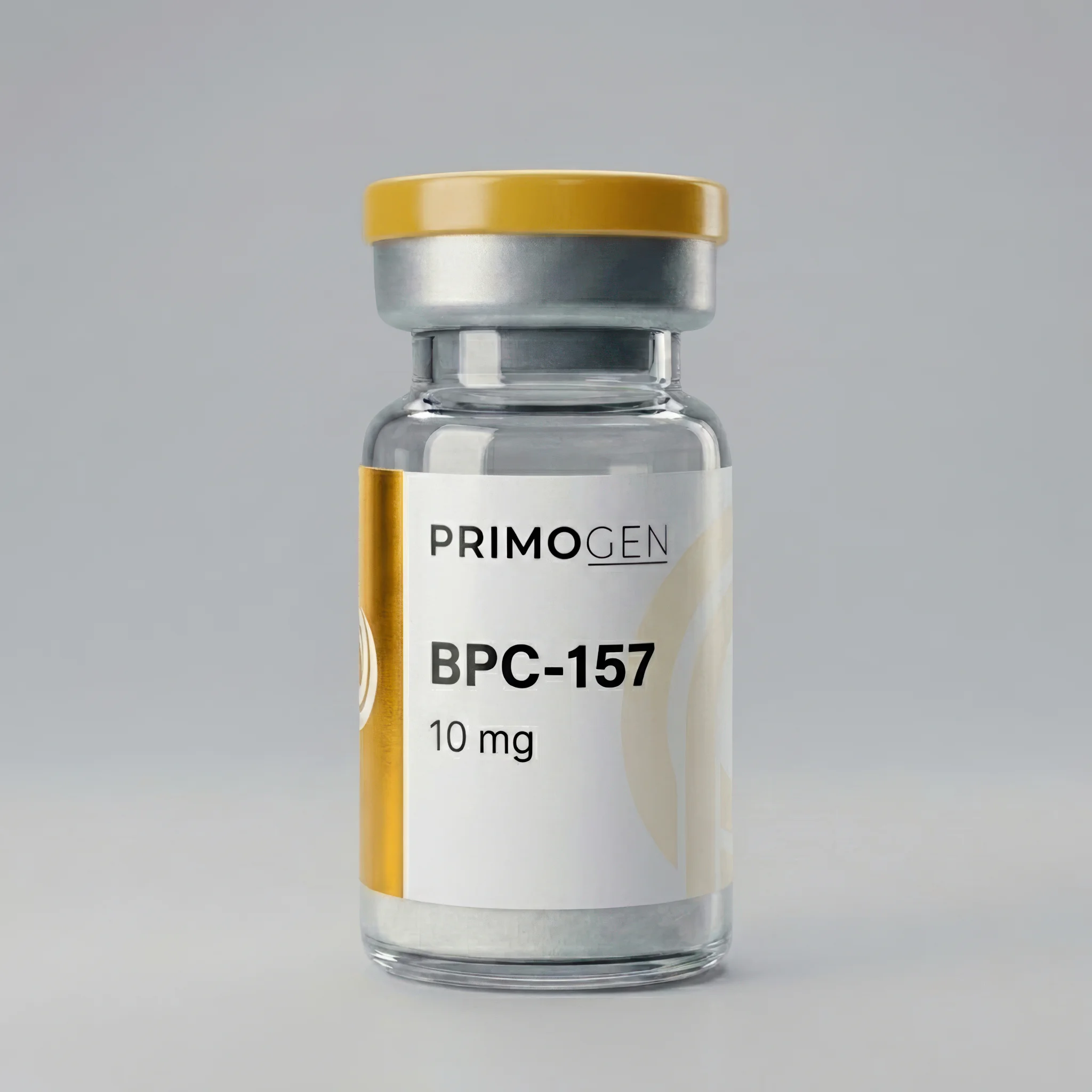
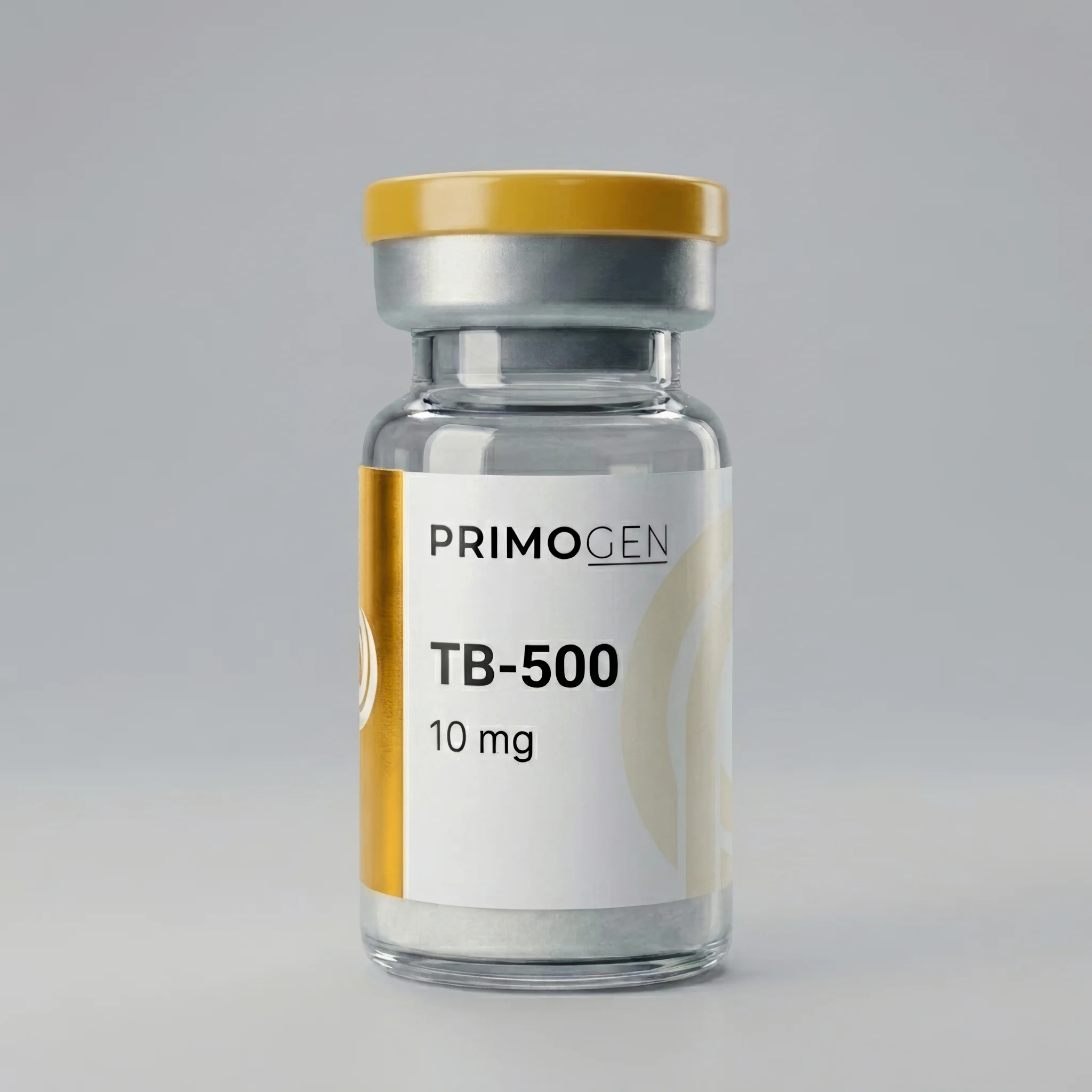
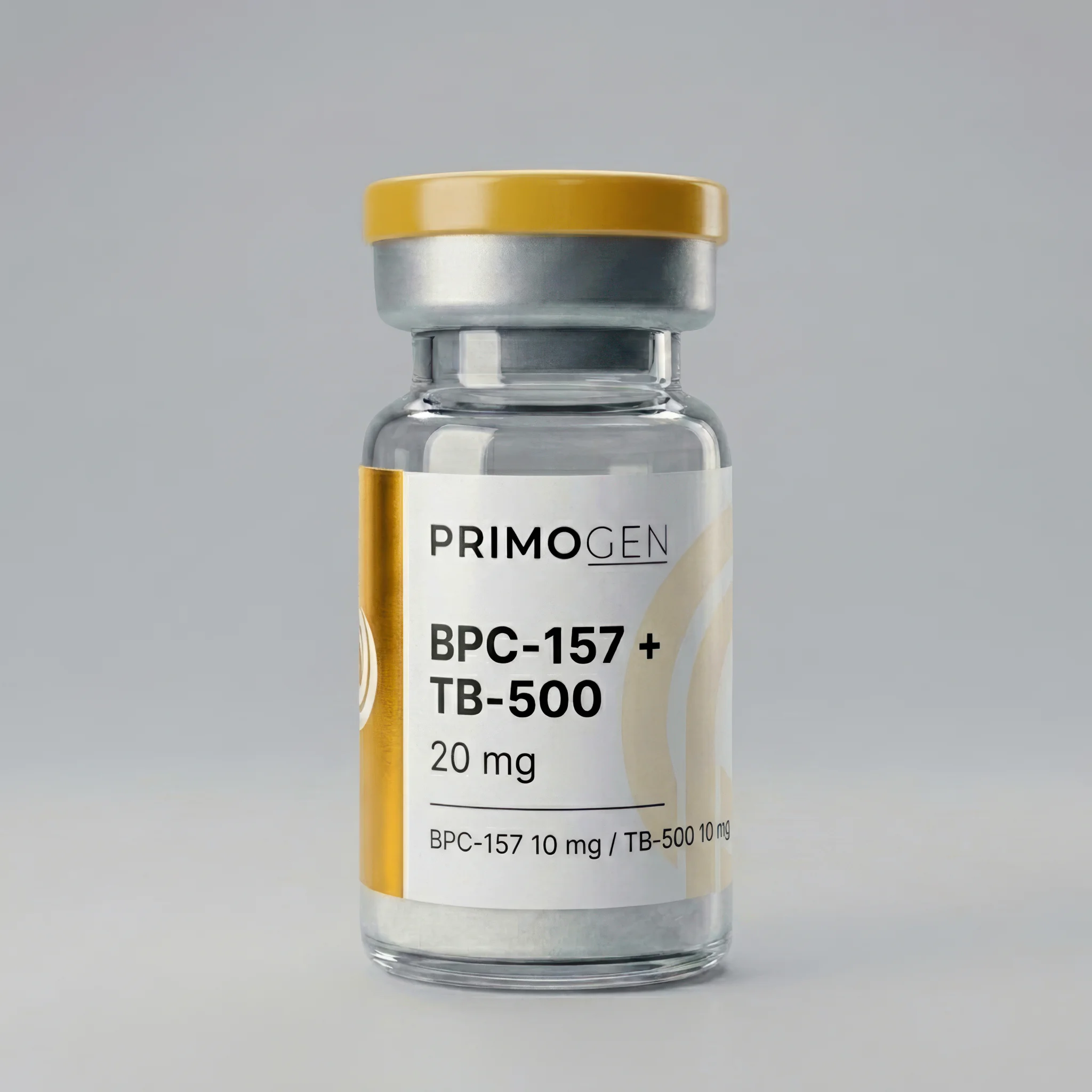
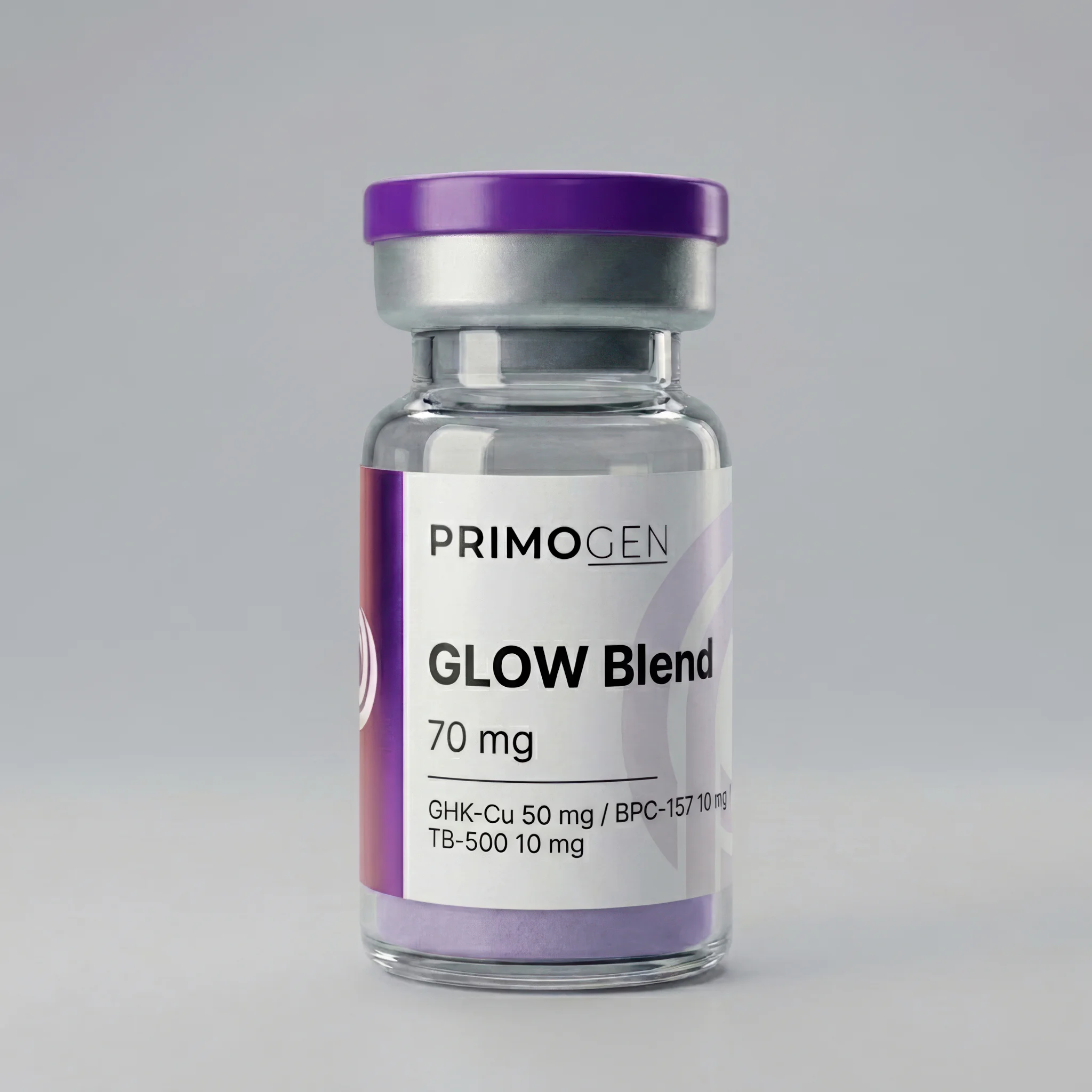
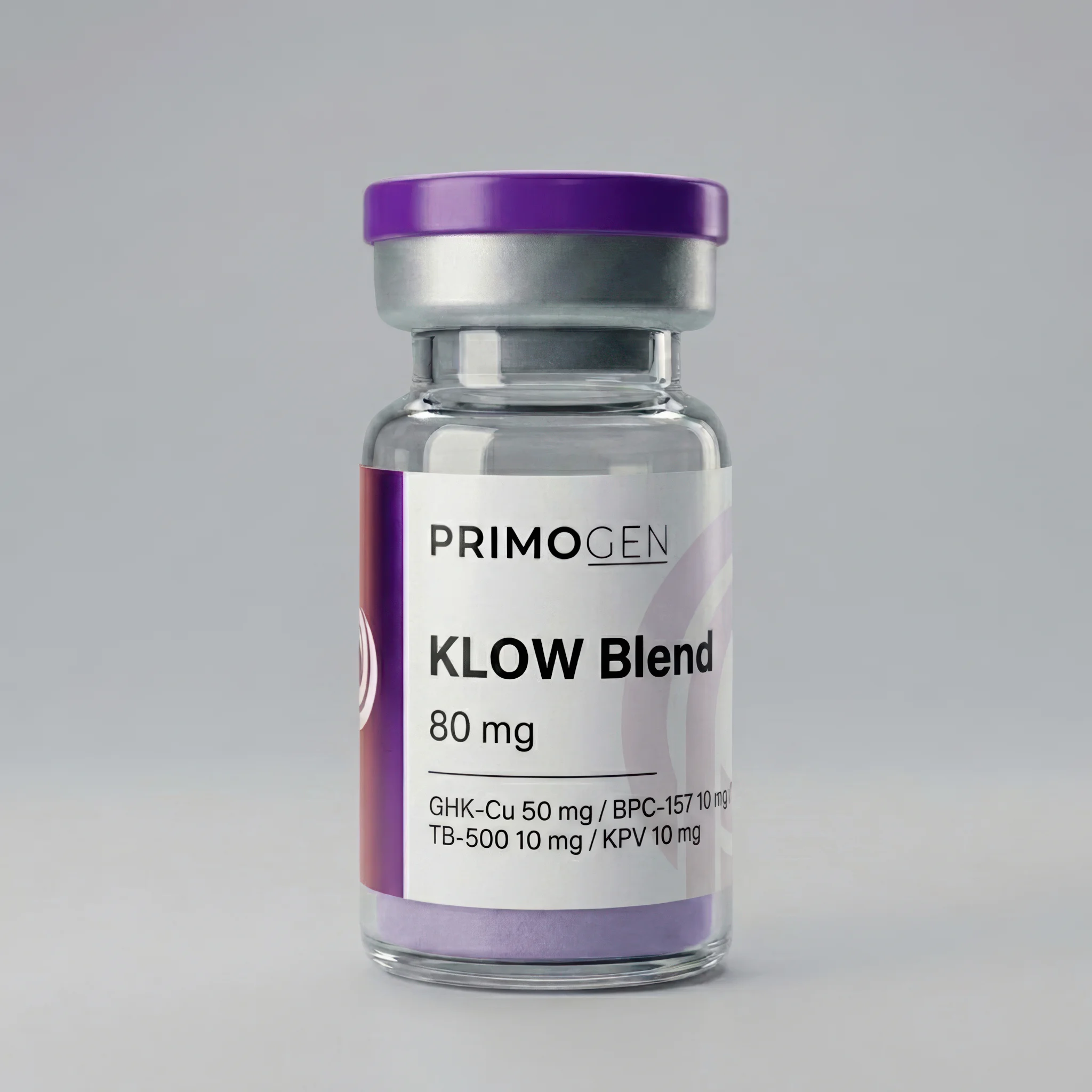
Take the 2-minute protocol quiz for a recommendation tailored to you.
Build your stackFrequently asked questions
Can you take BPC-157 and TB-500 together?
They are often paired in research protocols. The research describes different ways of working: local tissue repair for BPC-157, and whole-body cell movement for TB-500. So they are treated as partners, not doubles. The combination is the standard "Wolverine stack".
Can I buy BPC-157 and TB-500 as a blend?
Yes. Primogen sells a standalone BPC plus TB blend. Both peptides also feature in GLOW (with GHK-Cu) and KLOW (with GHK-Cu and KPV). A blend runs the whole stack from one vial. That is simpler, and usually better value than buying each peptide on its own. See the GLOW and KLOW blends guide for which one to pick.
Which one has more research behind it for tendons and joints?
BPC-157, in most cases. It is studied for local action at the injection site. In the lab, it has been reported to add growth hormone receptors in tendon cells. It also has better human data, including a published case series on injections into the knee for knee pain. TB-500 has supporting research too, but BPC-157 is the more targeted choice here.
Which one is more researched for the gut?
BPC-157, clearly. It comes from a protective stomach protein, it survives being swallowed, and the gut is one of its most studied areas. TB-500 is not studied for the gut.
Is TB-500 as researched as BPC-157?
No. There are only around five studies on the TB-500 fragment itself, against 180-plus for BPC-157. Much of the TB-500 reputation comes from research on the full Thymosin Beta-4 protein it is taken from. The formal evidence is thinner, and that is worth knowing.
Do you have to inject them?
TB-500, yes. BPC-157 can be injected or taken by mouth. In the research, the oral route is linked to gut studies. Injecting under the skin near the site is linked to local tendon or joint studies.
What time course does the research describe?
The research generally describes early tissue effects over 2 to 4 weeks. Deeper tissue rebuilding is reported over 4 to 12 weeks. These are research timelines, not a promise of any result. No large human trial has pinned them down.
Sources (6)›
- 1.Lee & Padgett. Intra-articular BPC 157 for knee pain. Altern Ther Health Med 2021 pubmed.ncbi.nlm.nih.gov ↗
- 2.Chang et al. BPC-157 and growth hormone receptor in tendon fibroblasts. Molecules 2014 pmc.ncbi.nlm.nih.gov ↗
- 3.Sikiric et al. BPC 157 and wound healing review. Front Pharmacol 2021 frontiersin.org ↗
- 4.He et al. Pharmacokinetics of BPC-157 in rats and dogs. Front Pharmacol 2022 pmc.ncbi.nlm.nih.gov ↗
- 5.McGuire et al. BPC-157: regeneration or risk? Curr Rev Musculoskelet Med 2025 pmc.ncbi.nlm.nih.gov ↗
- 6.Cox, Miller, Eichner. Detection and in vitro metabolism of BPC 157. Drug Test Anal 2017 doi.org ↗