
Nootropic Peptides: Semax, Selank and the Brain-Repair Compounds
Written against the cited studies. Last updated 7 Oct 2026
Key takeaways
Nootropic peptides are brain peptides people use to think more clearly, stay calmer under stress, and sleep better. They are short chains of amino acids, and they do not work like stimulants. Instead, they work on the brain's own growth and repair systems, mainly BDNF (brain-derived neurotrophic factor). The best known are Semax, Selank, DSIP, Pinealon and Cerebrolysin. Most are approved medicines in Russia and Eastern Europe, and research compounds in the West.
Peptides are a different category from most "nootropics" you read about. Many of those are stimulants in disguise, or supplements with a hopeful label. With peptides, the research is not about a caffeine-style buzz. It is about the systems the brain uses to grow, repair and run itself. BDNF is the key one here. It is the molecule studied in learning, memory and the repair of brain cells.
This guide covers the brain peptides worth knowing. That means the ones Primogen stocks, the two joining the range, and what the research says about each. It also explains where the evidence stands. Much of it comes from Russian clinical use rather than Western trials, and it is worth knowing what that means.
What do brain peptides actually do for you?
Here is what people report, in everyday terms, and roughly when.
- Semax: focus. Users commonly report a lift in focus, and finding words more easily, within 20 to 40 minutes of a nasal dose. Over 2 to 4 weeks, they describe coping with stress better.
- Selank: calm. People describe feeling calmer within minutes to hours. In Russian clinical studies, some people felt much calmer within the first 3 days. Courses usually run 2 to 4 weeks, and the calm is reported to last about a week after stopping.
- DSIP: sleep. It is the sleep-and-stress peptide of the group, covered in its own section below.
What not to expect: a caffeine-style buzz or a jolt. The effect is quieter than that: clearer and steadier, not wired. Long-term Western safety data is also thin, as covered below.
A few things can go the other way. Semax can irritate the inside of the nose at the higher end of the dose range. Selank has no reported tolerance or withdrawal in the research so far.
Which nootropic peptides does Primogen stock now?
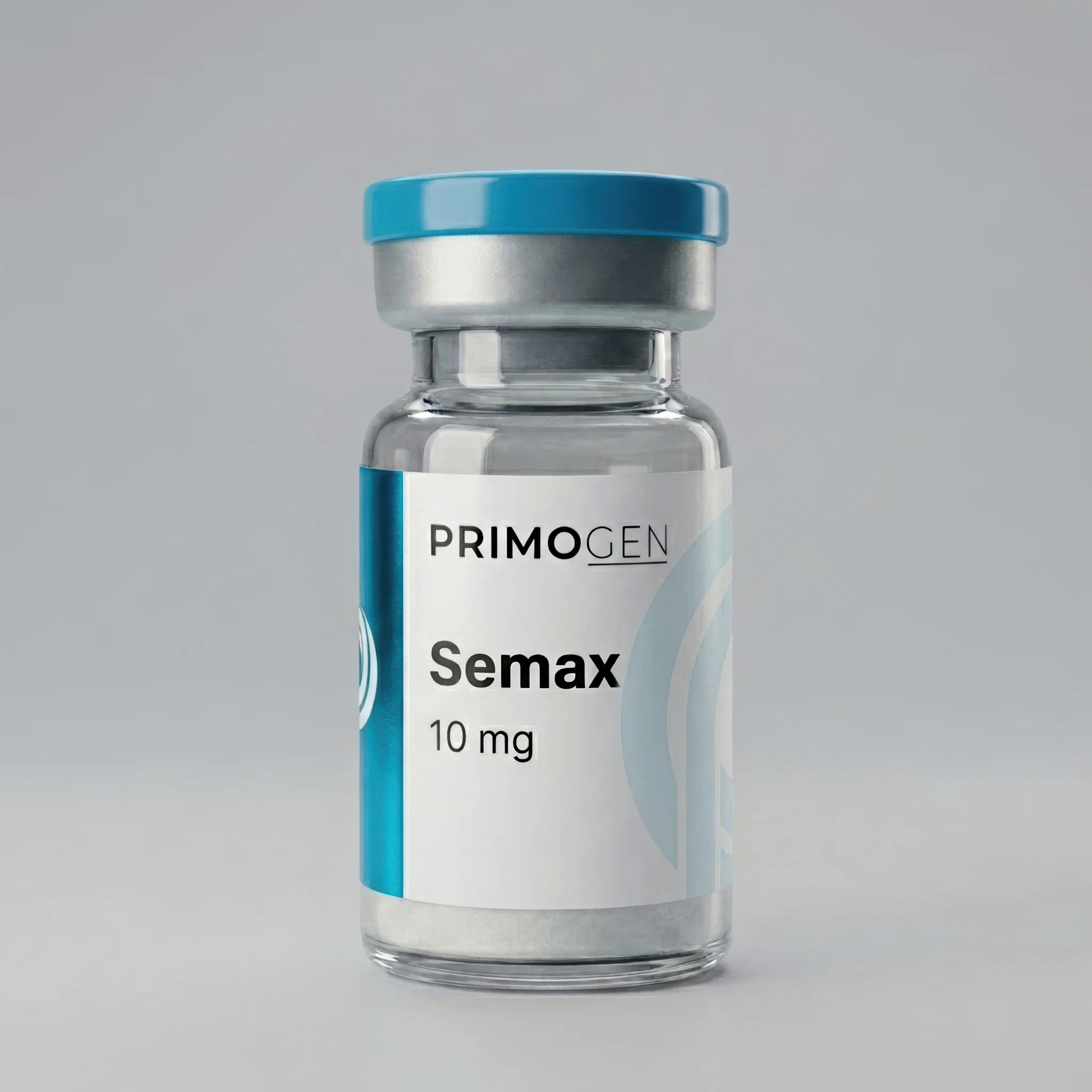
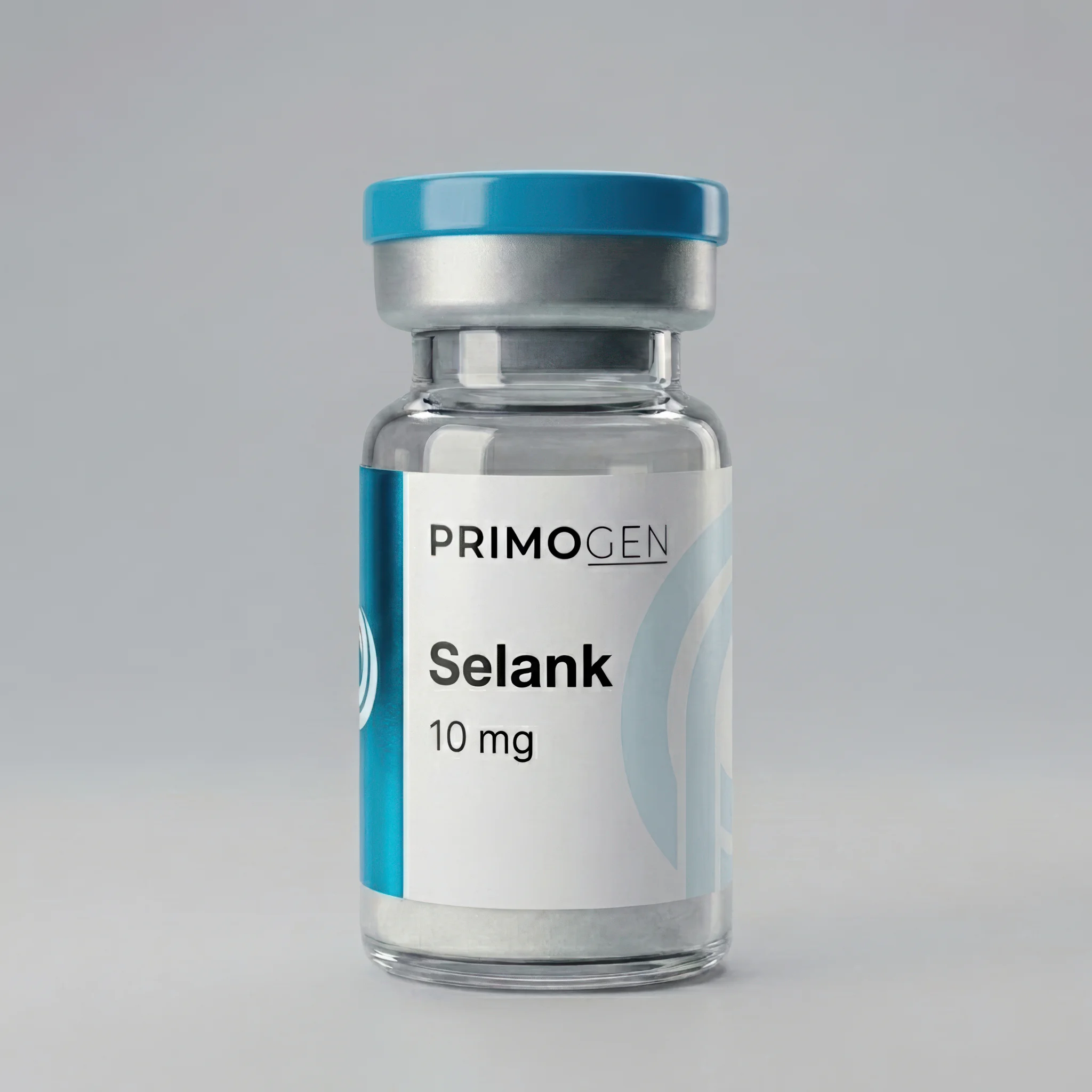
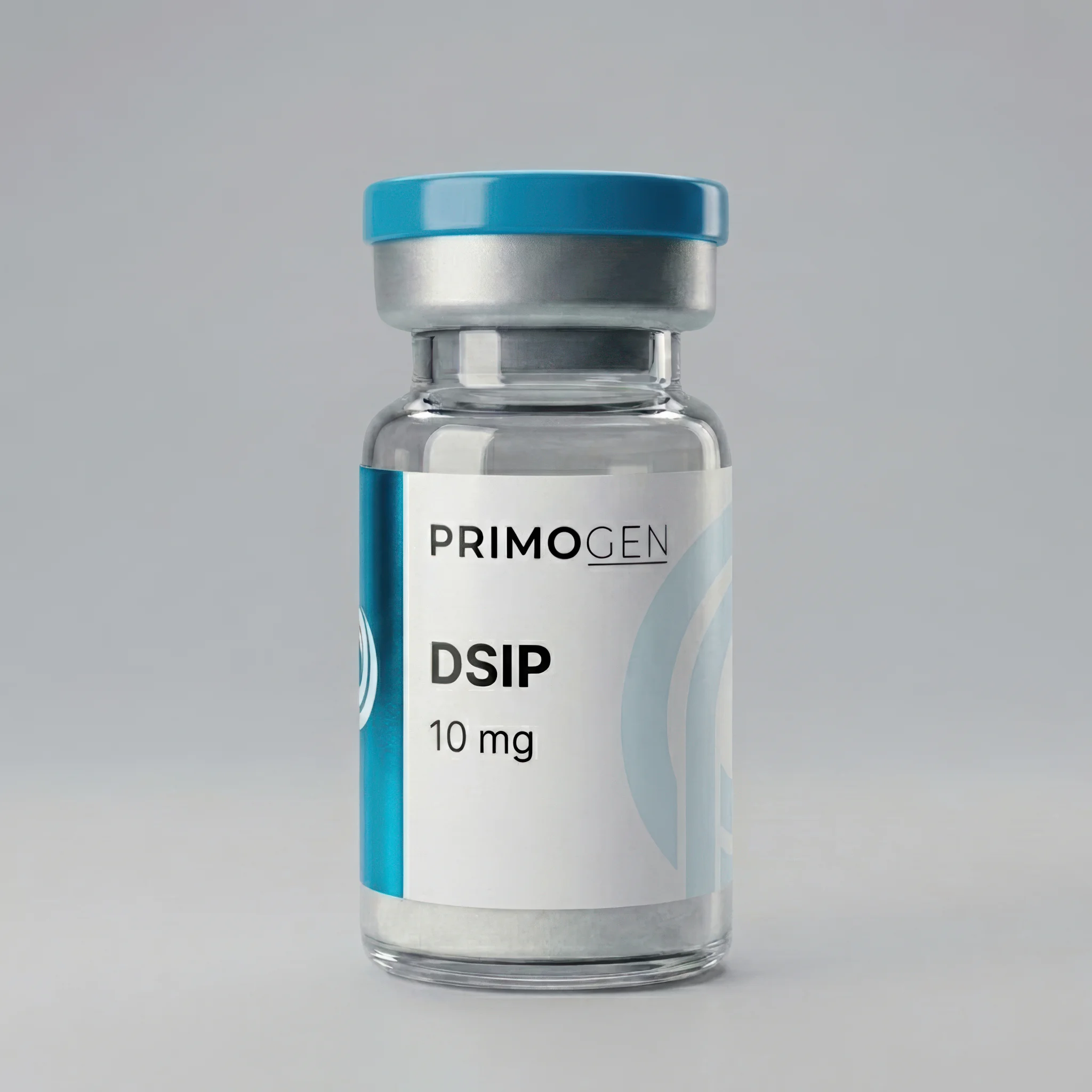
Primogen stocks three nootropic peptides today: Semax, Selank and DSIP. Semax and Selank are the core of the category. They are studied as a pair because they work in opposite directions. Semax is described as activating, and Selank as calming. DSIP adds the sleep-and-stress side.
What is Semax and what is it studied for?
Semax is a short peptide made from a piece of ACTH (adrenocorticotropic hormone), the body's own stress signal. It is studied mainly for its effects on BDNF and on brain injury. In Russia it is an approved medicine for stroke, thinking and memory problems, and ADHD. In the West it is a research compound. In late 2023 it was removed from US compounding pharmacy lists.
Research reports that Semax does three main things:
- It raises BDNF and its receptor, TrkB (the docking point BDNF acts through).
- It switches on the brain's dopamine and serotonin systems.
- It protects the brain in animal models of brain injury.
In one rat study, a single dose through the nose raised BDNF protein in the hippocampus about 1.4-fold. (The hippocampus is the brain's memory hub.) It also tripled the activity of the BDNF gene (Dolotov 2006). Most of its clinical record is in stroke recovery (Gusev 1997, 2018).
The research interest is in focus, verbal fluency and coping with stress. Users describe the feeling as "engaged, not wired," rather than like a stimulant. In research settings it is used as a nasal spray (the main route). It can also be given as a subcutaneous injection, meaning a small injection just under the skin. The usual range is 200 to 600 mcg per day, often in short cycles. The solution is clear and colourless, and the nasal route means no injection at all.
What is Selank and what is it studied for?
Selank is a lab-made peptide based on tuftsin, a piece of a natural immune molecule. It is studied as a way to ease anxiety without the downsides of benzodiazepines (benzos). Research describes it as a gentle, targeted tuner of the GABA-A system. GABA is the brain's main calming, "brakes on" signal. Benzos act on the same broad target. Selank is reported to do it without the sedation, tolerance or dependence.
Russian clinical work has compared its calming effects with benzos. It is studied as an option with no tolerance and no withdrawal. The research interest is in anxiety in stressful moments, general stress load, and a non-addictive profile.
In research settings it is used as a nasal spray or a subcutaneous injection, commonly 150 to 500 mcg a day. It is often studied with Semax as the classic pair: Semax for drive, Selank for calm. Once mixed, Selank is a clear, colourless solution.
Does DSIP count as a brain peptide?
Yes. DSIP (Delta Sleep-Inducing Peptide) is a neuropeptide, a peptide that carries signals in the brain and nerves. It is studied mainly for deepening slow-wave (delta) sleep, the deep stage of sleep.
Research also describes effects on the stress system. DSIP turns down the drive from ACTH and cortisol (the main stress hormone). That is reported to have knock-on effects on circadian rhythm, the body's roughly 24-hour internal clock. So DSIP is the sleep-and-stress member of this group. In research settings it is given as a subcutaneous injection. The usual dose is around 100 to 300 mcg an hour or two before bed, often in cycles.
Which nootropic peptides are joining the range next?
Pinealon and Cerebrolysin are the next two Primogen is bringing in. They sit at the more serious, brain-repair end of the category. Both are studied for how they feed and protect brain cells. Cerebrolysin has the deeper clinical record. Pinealon is more experimental.
What is Pinealon and what is it studied for?
Pinealon is a Khavinson peptide bioregulator. These are a Russian-made class of very short peptides. They are studied for switching on the body's own upkeep programs.
Pinealon is a tripeptide, a tiny peptide just three amino acids long. It is thought to slot into DNA and help expose the right genes so they can be read and switched on. Studies look at brain metabolism, brain-cell protection, body-clock and thinking markers, and brain ageing in animal models. It is the most experimental of the four here, with less evidence behind it. It belongs in the "promising, still early" group.
What is Cerebrolysin and why is it the heavyweight?
Cerebrolysin is the most clinically established compound in this group. It is not a single peptide. It is a blend of brain-cell-feeding peptides taken from purified pig brain. It is studied for supplying growth factors such as BDNF, GDNF, NGF and CNTF.
That source sounds wild, we know. But the material is purified right down to the active peptides, with none of the disease risk of raw animal tissue. If pig-derived is an issue for you, on halal grounds or otherwise, there is a like-for-like option. Cortexin is made the same way, but from cattle instead of pigs. That makes it a halal-friendly choice. It is also said to be good value: a small dose is said to carry as much peptide as a much larger volume of Cerebrolysin. It is one we may bring into the range.
Cerebrolysin is sometimes called the "Rolls-Royce of nootropics." Its clinical record is the strongest in this group. It is an approved medicine in Russia and parts of Eastern Europe, with decades of use in stroke, dementia and brain injury. In clinics it is given as a course of shots into the muscle (5 to 10 ml a day). Its effects are described as building over a cycle, not within an hour. Clinics have also given it as a drip into a vein. That is a medical setting, and not something we recommend for research use.
What other nootropic peptides are worth knowing?
Beyond the main four, a few other brain peptides come up often enough to know about. Some are very early, and some are only close cousins of peptides:
- Dihexa is a strong compound that targets synapses, the junctions where brain cells connect and talk to each other. In animal models it is studied for forming new links between brain cells and for memory tasks. It is early and very much a research compound. Still, it is one of the most interesting molecules in the category.
- The Khavinson bioregulators are a whole family. Pinealon is one. Epitalon is another, and one we already stock. It is aimed at the pineal gland, a tiny gland deep in the brain. It is studied for sleep hormones, longevity markers and telomeres, the protective caps on the ends of your DNA that shorten as cells age. This is a deep and growing area, and we will give it its own full guide soon.
- Noopept and a few similar compounds are not true peptides. But they come up in the same conversation often enough to mention.
These compounds are not all at the same stage. Some are well used and some are truly experimental, and we will always tell you which is which. Primogen plans to keep expanding its brain-peptide range as the space grows. This is one of the areas we are most excited about, so watch this space.
How do nootropic peptides work?
Most of this category comes back to one theme: supporting BDNF and the brain's own repair and signalling systems.
- Semax and Cerebrolysin are studied for raising this brain-cell support directly.
- Selank is studied for tuning the calming GABA system, while also affecting BDNF.
- Pinealon is studied for working further upstream, on the gene programs behind brain upkeep.
None of them are stimulants. The shared research idea is steady support for the brain's own systems, not a quick lift.
How are nootropic peptides dosed and handled?
In research settings, dosing and handling differ by compound:
- Semax and Selank are used as a nasal spray or a small injection under the skin. They are dosed in micrograms (roughly 150 to 600 mcg a day). Cycles are usually short, from a couple of weeks to a couple of months.
- Cerebrolysin is given as a course of injections into the muscle over a set number of days in clinical protocols.
- Pinealon is dosed by the community in milligrams, by mouth or by injection, in short courses.
Here is a worked example. Mix a 30 mg vial of Semax with 3 ml of bacteriostatic water and you get 10 mg/ml. A 300 mcg research dose is then 0.03 ml. On a 100-unit (1 ml) insulin syringe, that is just 3 units. See how to reconstitute and dose for the full method.
For how these fit with other compounds, see peptide stacking.
How good is the evidence for nootropic peptides?
The strongest clinical evidence, especially for Semax, Selank and Cerebrolysin, comes from Russia and Eastern Europe. These have been approved medicines there and used for decades. That is a real and large track record, even though it did not come from US trials.
A few things are worth keeping in mind:
- Western data is thinner. There are few large Western randomised trials, and little long-term independent safety tracking. Human data rarely runs past a few weeks.
- Some are newer than others. Pinealon in particular is still early. Treat the established compounds as well used, with a solid clinical history. Treat the newer ones as promising but unproven.
- Results vary. With DSIP in particular, reported response varies widely across studies and user accounts.
- Drug testing. All of these are research compounds in the West. Semax sits in an "unclear status" grey zone in anti-doping analyses. It is flagged as a brain booster that looks like substances on the WADA list, but it is not named on that list (Pokrywka 2025). Brain-boosting peptides in general are more and more often flagged as possible "brain doping" (Pokrywka 2025). Tested athletes should treat them as a risk.
- DSIP and sport. DSIP does not appear in the analyses that flag Semax and Selank. That makes it the one in this group least tied up in doping concerns. The World Anti-Doping Agency sets the banned list for sport, so tested athletes should always check the current list themselves.
Referenced products
Which nootropic peptide matches my research interest?
It depends on which system you want to study. Here is where the research points for each:
| Research interest | Where the research points |
|---|---|
| Focus, drive and verbal fluency | Semax |
| Calm and composure | Selank |
| Both ends together | The classic Semax plus Selank pair |
| Sleep and the stress system | DSIP |
| Nerve repair and brain-cell support | Cerebrolysin as the heavyweight, with Pinealon as the experimental bioregulator option |
Primogen stocks Semax, Selank and DSIP now. Pinealon and Cerebrolysin are joining the range, with more brain peptides to follow. This is one of the spaces we are most excited about and actively building out. If there is one you want that we do not list yet, ask, and watch this space.
Take the 2-minute protocol quiz for a recommendation tailored to you.
Build your stackFrequently asked questions
What is the difference between Semax and Selank?
Semax is studied on the activating side: focus, drive, verbal fluency and coping with stress. Selank is studied on the calming side: anxiety and composure. It is reported to work without sedation or dependence. They are often studied as a pair because one targets drive and the other calm.
Are nootropic peptides like Adderall or caffeine?
No. Stimulants push your nervous system harder, and they come with a crash and a build-up of tolerance. These peptides are studied for how they work on the brain's own growth and signalling systems, mainly BDNF. That is why the research focus is long-term support for brain cells, not a buzz.
How do you take Semax and Selank?
Both are dosed in micrograms, as a nasal spray or a small injection just under the skin. They are usually taken in short cycles. Nasal is popular because it is easy. Injection is used for longer or higher-dose protocols.
Is the evidence any good, or is it all anecdotal?
It is better than most of the nootropic market. Semax, Selank and Cerebrolysin are approved medicines in Russia and parts of Eastern Europe, with decades of clinical use. That is a real evidence base. What is thin is large Western trials and long-term independent safety data. So they sit somewhere between "well used in clinics" and "not fully studied by Western standards."
Can athletes use these?
It is risky if you are drug-tested. Brain-boosting peptides like Semax and Selank sit in an "unclear status" grey zone in anti-doping analyses. They are flagged as possible brain doping, though they are not named on the WADA list. Tested athletes should treat them as a risk.
Sources (5)›
- 1.Dolotov et al. Semax raises BDNF/TrkB in rat hippocampus. 2006 pubmed.ncbi.nlm.nih.gov ↗
- 2.Gusev et al. Semax in ischaemic stroke. 1997 pubmed.ncbi.nlm.nih.gov ↗
- 3.Gusev et al. Semax and BDNF in stroke. 2018 researchgate.net ↗
- 4.Medvedeva et al. Semax ischaemia transcriptome, BMC Genomics 2014 pubmed.ncbi.nlm.nih.gov ↗
- 5.Pokrywka et al. Cognitive-enhancer peptides and brain doping. 2025 pmc.ncbi.nlm.nih.gov ↗